
| Market | Selling Price | Buying Price | Range (24h) | Change (%) |
|---|---|---|---|---|
| In Black Market | 35.24 | 34.88 | 50.28 – 35.24 | 0.00%فرق: 0.00 |
| Bank Rates | 34.81 | 34.67 | — | 0.00%فرق: 0.00 |
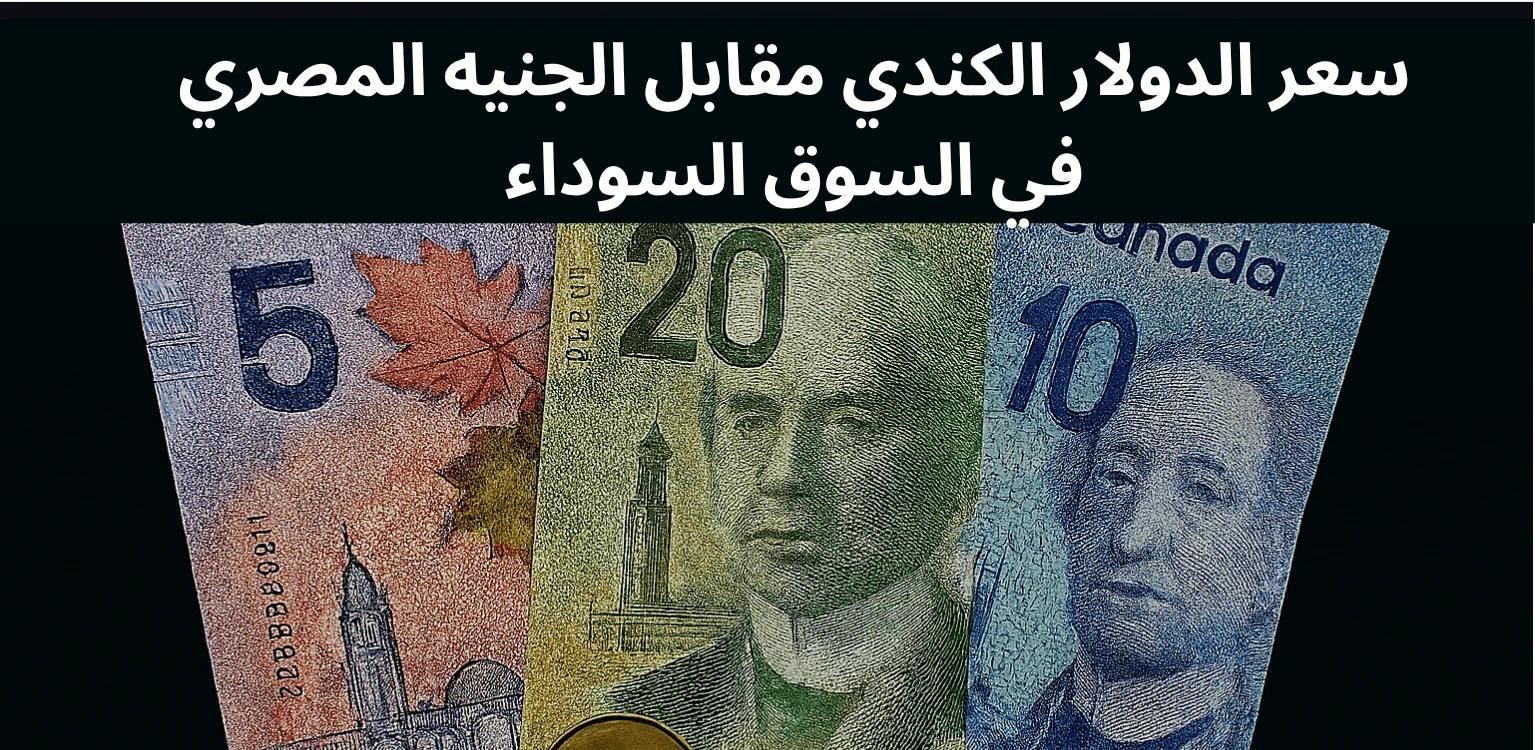
Market Update: Today, the Canadian Dollar to Egyptian Pound exchange rate in the black market has remained stable compared to yesterday. The current buying rate is 34.88 EGP, while the selling rate is 35.24 EGP. In official banks, the rate stands at 34.81 EGP for selling.
Currency Converter
Quick Conversion: Canadian Dollar to Egyptian Pound
 Canadian Dollar
 |
 Egyptian Pound
 |
|---|---|
| 1 Canadian Dollar | 34.88 Egyptian Pound |
| 5 Canadian Dollar | 174.40 Egyptian Pound |
| 15 Canadian Dollar | 523.20 Egyptian Pound |
| 25 Canadian Dollar | 872.00 Egyptian Pound |
| 50 Canadian Dollar | 1,744.00 Egyptian Pound |
When Ahmed sent C$200 from Toronto to his sister in Cairo, he expected it to provide modest support. At the exchange bureau, however, the stark difference between the bank rate and the black-market rate left them both astonished.
This moment underscores a critical truth: understanding the exchange rate between the Canadian Dollar (CAD) and the Egyptian Pound (EGP) can significantly impact the value of your money. Whether you’re sending remittances, traveling, or conducting business, knowing how CAD to EGP works empowers smarter financial decisions.
This comprehensive guide demystifies CAD to EGP in plain English, covering the Canadian dollar’s basics, the factors driving its fluctuations against the Egyptian pound, the differences between bank, market, and black-market rates, and practical tips for exchanging currency in Egypt. While we avoid specific numbers (as your website already provides real-time converters), we focus on causes, context, and actionable advice to help readers maximize their money’s value.
Success Story: Hala’s Remittance Win
Hala, a nurse in Vancouver, sent CAD to her family in Alexandria for medical expenses. By comparing bank rates and timing her transfer during a favorable CAD surge, she saved enough to cover an extra week’s worth of supplies.
Check out Arabic version of this article: سعر الدولار الكندي مقابل الجنيه المصري في السوق السوداء
What Is the Canadian Dollar (CAD)?
The Canadian Dollar (CAD), affectionately nicknamed the “loonie” after the loon bird on the $1 coin, is Canada’s official currency. Issued by the Bank of Canada and minted by the Royal Canadian Mint, CAD is a globally traded currency, particularly in commodity markets like oil, gas, and minerals. Its value often fluctuates with global demand for these resources, making it sensitive to economic shifts. The current polymer banknote series, known for durability and security, reflects Canada’s commitment to modern currency standards.
Why Does CAD to EGP Fluctuate?
The CAD-to-EGP exchange rate is influenced by a complex interplay of global and local factors. Here are the primary drivers:
Success Story: Omar’s Travel Savings
Omar, a student in Ottawa, exchanged CAD for EGP before studying abroad in Cairo. Using a major bank with transparent fees, he avoided high black-market risks and stretched his budget for local travel.
Market Rate vs. Bank Rate vs. Black Market: What’s the Difference?
When checking “CAD to EGP Black Market Rate Today” versus a bank’s posted rate, readers will notice discrepancies. Here’s why:
Practical Tip: Banks offer safety and legality but may cost more due to spreads and fees. Black-market rates can be tempting but involve risks. Advise readers to prioritize reliability and transparency when choosing where to exchange.
How Significant Are Exchange Rate Spreads?
The spread—the difference between buy and sell rates—varies based on market conditions. In stable periods with ample liquidity, spreads between interbank and bank rates are narrow. During volatility, such as major economic announcements or tightened currency availability in Egypt, spreads can widen significantly. For CAD to EGP, global CAD trends and local EGP supply drive these gaps. Encourage readers to use your website’s converter to compare rates and time their exchanges strategically.
Success Story: Laila’s Business Boost
Laila, an importer in Giza, timed her CAD-to-EGP conversion during a dip in oil prices, securing better rates for her Canadian supplier payments, which increased her profit margin.
Which Egyptian Banks Exchange CAD?
Several reputable Egyptian banks facilitate CAD-to-EGP exchanges, though availability varies by branch. Commonly cited banks include:
Canadian Banknotes and Coins: What’s in Circulation?
Canadian banknotes, made of durable polymer, come in denominations of $5, $10, $20, $50, and $100. Coins include 5¢ (though pennies are rarely used), 10¢, 25¢, $1 (loonie), and $2 (toonie). These denominations are widely accepted, and their designs are detailed on the Bank of Canada’s official banknote pages. For travelers or those handling physical CAD, understanding these denominations helps avoid confusion at exchange points.
How Websites Calculate CAD to EGP Market Rates
Our website’s currency converter is a valuable tool. Here’s a transparent, reader-friendly overview of how “CAD to EGP market rates” are typically calculated:
- Source Mid-Market Feeds: Aggregate real-time data from reputable foreign exchange providers or APIs to establish a baseline interbank rate.
- Normalize and Weight Data: Average multiple feeds, prioritizing the most reliable and recent data for accuracy.
- Adjust for Local Conditions: Factor in Egypt’s liquidity constraints or market volatility to reflect real-world conditions.
- Apply Retail Margin: Add a small spread to cover operational costs, rounding to user-friendly decimal places.
- Optional Black-Market Indicator: If available, display a separate, clearly labeled estimate of parallel-market rates based on specialized data.
- Show Transparency: Include a timestamp and source list to assure users of the rate’s recency and reliability.
Display Note: “Our CAD to EGP market rate combines a weighted interbank rate, a local liquidity adjustment, and a minimal retail spread. We update every few minutes for accuracy.”
Why CAD Tracks USD and Its Impact on CAD to EGP
The CAD and USD are closely linked due to Canada’s reliance on US trade and the prominence of the USD/CAD trading pair. When the USD strengthens, CAD may weaken against it, influencing CAD to EGP indirectly through Egypt’s USD-driven FX dynamics. Encourage readers to track USD trends alongside Canadian economic indicators, such as oil prices or Bank of Canada policies, to anticipate CAD to EGP movements.
Recent Trends and Their Implications
Recent analyses highlight several drivers of CAD’s performance:
Pro Tip: While searching for “Canadian Dollar to Egyptian Pound rates today” or “Canadian Dollar black market rates,” consider whether Canada-specific news, USD strength, or Egypt’s FX policies are driving changes. This context informs better exchange timing.
What to Watch for Future CAD to EGP Trends
While predicting exact rates is impossible, key indicators provide clues:
Scenario Insight: If oil prices climb and the Bank of Canada raises rates, CAD may strengthen against EGP. Conversely, global risk aversion could weaken CAD.
Why CAD to EGP Matters to Your Readers
Understanding CAD to EGP is crucial for various scenarios:
Frequently Asked Questions
Conclusion: Make Every Cent Count
When two friends compared their CAD-to-EGP exchanges for a family wedding, one used a bank and lost a small margin, while the other chose a trusted local service, saving enough to cover taxis for the entire event. These small choices in navigating CAD to EGP rates can transform real-world outcomes. By understanding exchange rate drivers, comparing bank and market options, and using tools like your website’s converter, readers can maximize their money’s value in every transaction.