
| Market | Selling Price | Buying Price | Range (24h) | Change (%) |
|---|---|---|---|---|
| In Black Market | 69.76 | 69.06 | 69.76 – 50.28 | 0.00%فرق: 0.00 |
| Bank Rates | 69.70 | 69.03 | — | 0.00%فرق: 0.00 |
Market Update: Today, the Jordanian Dinar to Egyptian Pound exchange rate in the black market has remained stable compared to yesterday. The current buying rate is 69.06 EGP, while the selling rate is 69.76 EGP. In official banks, the rate stands at 69.70 EGP for selling.
Currency Converter
Quick Conversion: Jordanian Dinar to Egyptian Pound
 Jordanian Dinar
 |
 Egyptian Pound
 |
|---|---|
| 1 Jordanian Dinar | 69.06 Egyptian Pound |
| 5 Jordanian Dinar | 345.30 Egyptian Pound |
| 15 Jordanian Dinar | 1,035.90 Egyptian Pound |
| 25 Jordanian Dinar | 1,726.50 Egyptian Pound |
| 50 Jordanian Dinar | 3,453.00 Egyptian Pound |
When Leila sent money from Amman to Cairo, she anticipated a minor paperwork delay. What she didn’t expect was how a slight shift in the exchange rate could make a noticeable difference at the checkout, prompting her to explore how the Jordanian dinar to Egyptian pound (JOD to EGP) rate is determined and why it matters to everyday people.
What Is the Jordanian Dinar (JOD)?
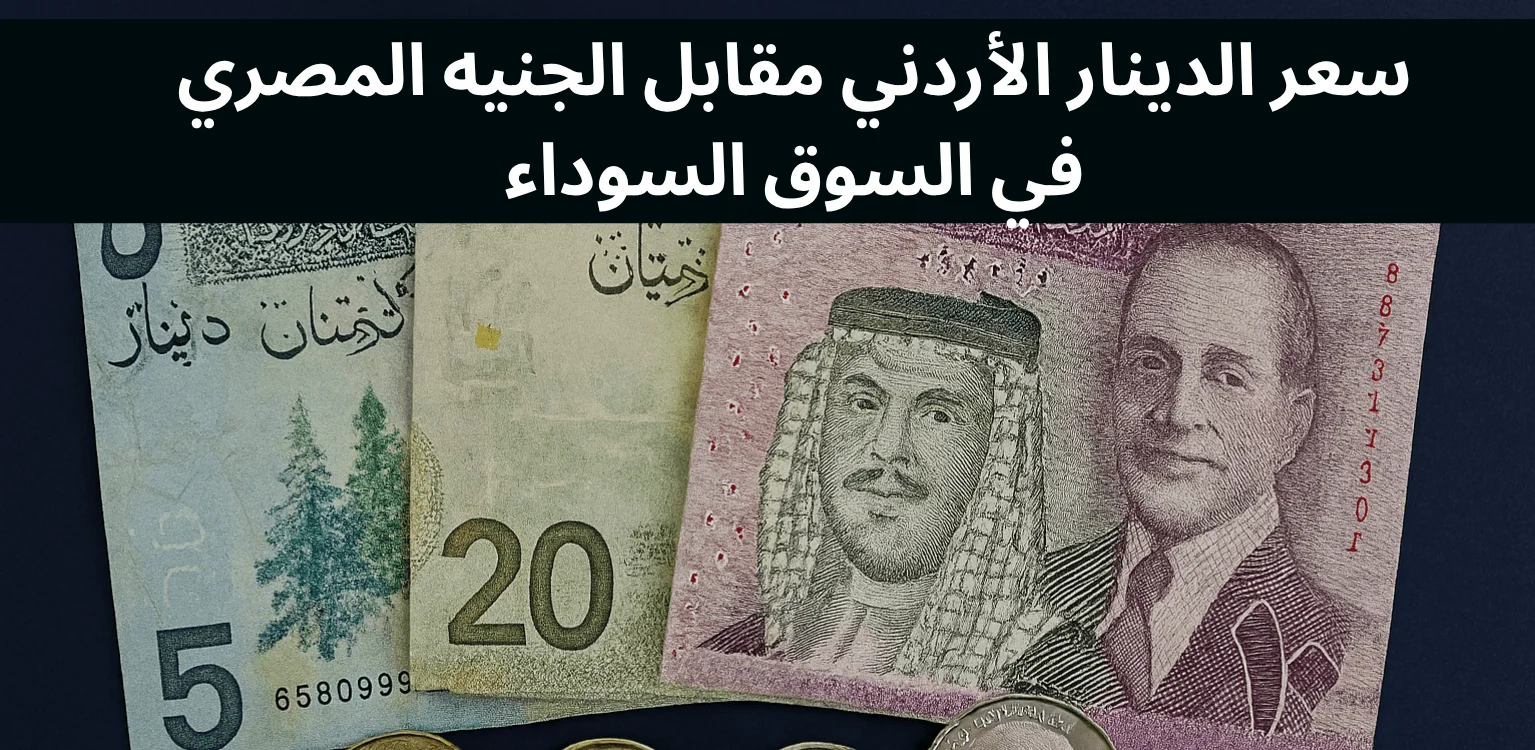
The Jordanian dinar (ISO code: JOD) is the official currency of the Hashemite Kingdom of Jordan, introduced in 1949. It is subdivided into 100 qirsh (also known as piastres) or 1,000 fulus in older notations. The Central Bank of Jordan (CBJ) issues and manages the currency, maintaining a deliberate stability policy, often pegging it closely to the U.S. dollar (USD). Common banknotes include 1, 5, 10, 20, and 50 dinars, while coins cover smaller denominations for everyday transactions.
The JOD’s stability makes it a reliable currency for both locals and international users, particularly in cross-border transactions with countries like Egypt.
Check out Arabic version of this article: سعر الدينار الأردني مقابل الجنيه المصري في السوق السوداء
Success Story: Hala’s Smart Exchange
Hala, a Jordanian student in Cairo, used an online rate comparison tool to exchange 500 JOD at Banque Misr, securing a better rate than street vendors and avoiding hidden fees. Her careful planning saved her enough to cover a week’s expenses.
Why JOD to EGP Matters
The JOD to EGP exchange rate is critical for various groups:
Understanding the JOD to EGP rate helps users make informed financial decisions, whether sending money home or planning a trip.
How JOD Relates to Major Currencies
The Jordanian dinar is closely tied to the U.S. dollar, a policy enforced by the Central Bank of Jordan to ensure stability. This linkage means JOD’s value against other currencies, including EGP, is influenced by USD movements and global USD liquidity. While JOD remains relatively stable, fluctuations in the JOD to EGP rate often stem from changes in the Egyptian pound’s value, driven by Egypt’s economic conditions.
Key Drivers of JOD to EGP Fluctuations
Several global and local factors influence the JOD to EGP exchange rate:
Bank Rates vs. Parallel Market Rates
When checking JOD to EGP rates, you’ll encounter two types of quotes:
For safety and reliability, official bank rates are recommended, though parallel rates may appeal to those seeking quick cash exchanges.
Success Story: Ahmed’s Business Win
Ahmed, a trader importing goods from Jordan, checked mid-market rates online and negotiated with CIB for a bulk JOD exchange, reducing costs by 2%. This small saving boosted his profit margin on a large shipment.
Where to Exchange JOD in Egypt
For secure and legal JOD exchanges, consider these trusted institutions:
Practical Tips for Exchanging JOD
JOD Denominations: Notes and Coins
The Jordanian dinar is available in the following denominations:
- Banknotes: 1, 5, 10, 20, and 50 dinars, widely used for most transactions.
- Coins: Smaller values in qirsh (piastres) or fils, primarily for low-value purchases.
When exchanging JOD in Egypt, ensure banknotes are in good condition, as damaged notes may be rejected. Higher-denomination notes (20 or 50 dinars) are preferred for larger transactions due to convenience.
How our Website Calculates JOD to EGP Rates
Websites, including ours, use sophisticated algorithms to provide accurate JOD to EGP market rates. Here’s how it works:
- Data Aggregation: Rates are sourced from multiple providers, such as central banks, interbank feeds, and financial platforms, ensuring diverse and reliable inputs.
- Data Cleaning: Stale or outlier quotes are filtered out using statistical methods like median filtering or z-score tests.
- Weighted Averaging: More reliable sources (e.g., central bank data) are given higher weight in calculations.
- Spread Adjustment: A small margin is applied to account for transaction costs and local market conditions, with mid-market rates displayed separately.
- Parallel Market Indicator: Some platforms include informal market rates, clearly labeled as unofficial, based on local data like social media or FX boards.
- Timestamp Transparency: Rates include timestamps and source details for user trust.
- Cross-Rate Fallback: If direct JOD to EGP rates are unavailable, the rate is calculated via JOD to USD and USD to EGP conversions.
This method ensures transparency, balancing accuracy with practical usability for users.
Success Story: Noor’s Travel Savings
Noor, an Egyptian tourist in Amman, exchanged 1,000 JOD at NBE after verifying rates online, avoiding a risky street deal. The transparent bank rate ensured she had extra funds for her trip.
JOD and USD: A Technical Connection
The JOD’s peg to the USD (approximately 1 JOD ≈ 1.4104 USD) means its value is relatively stable. As a result, JOD to EGP fluctuations are often driven by changes in the USD to EGP rate. For example, if the USD strengthens and EGP weakens, the JOD to EGP rate may rise, even if JOD remains steady against USD.
Recent Trends and What to Watch
In recent months, the JOD has remained stable against the USD, while the EGP has faced volatility due to Egypt’s inflationary pressures, foreign reserve constraints, and policy shifts. This dynamic makes EGP the primary driver of JOD to EGP fluctuations. Key factors to monitor include:
Expected Rate Variations
- Normal Conditions: Bank rates typically deviate 1–3% from mid-market rates due to spreads.
- High-Stress Periods: Parallel market rates may diverge significantly due to cash shortages or heightened demand.
Practical Advice for Transactions
To optimize your JOD to EGP exchanges:
FAQ: Quick Answers to Common Questions
Conclusion: Make Informed Choices
Whether you’re a traveler like Noor, a student like Hala, or a businessperson like Ahmed, understanding the JOD to EGP exchange rate empowers you to save money and avoid pitfalls. By comparing rates, choosing secure exchange methods, and staying informed about market trends, you can make every transaction count. Small choices, backed by the right information, protect your wallet and enhance your financial decisions.